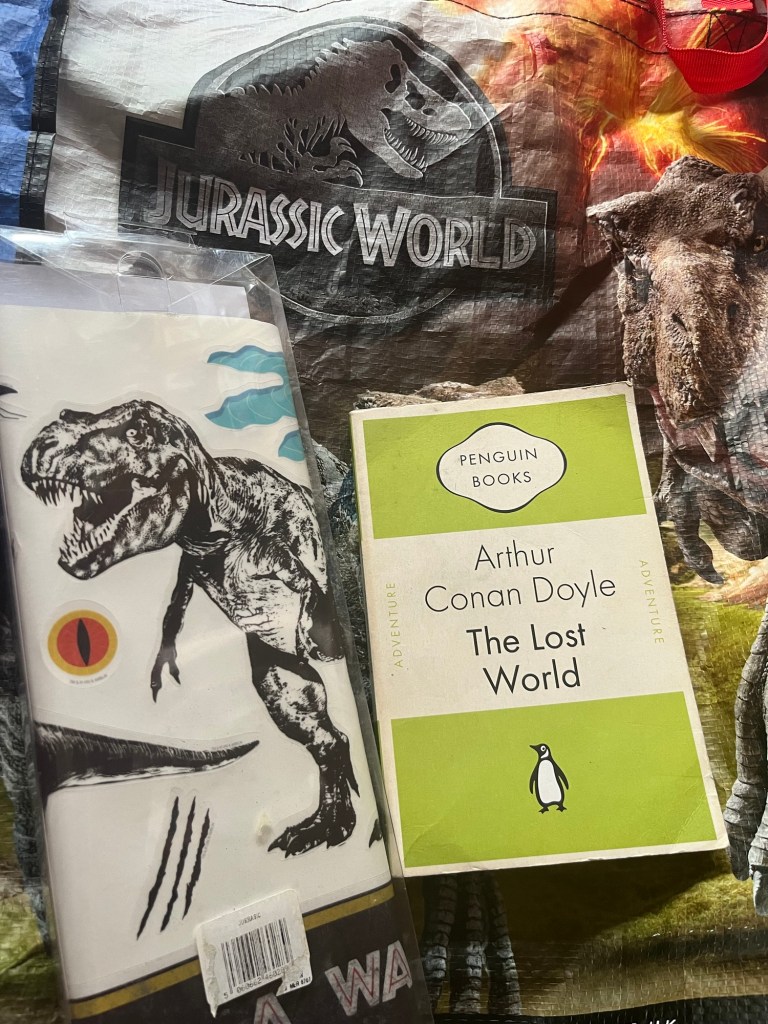
The Lost World by Sir Arthur Conan Doyle

Dinosaur obsessed

My boyfriend and I are humungous Jurassic Park fans. So much so that the tagline for our own relationship is “Life finds a way”. This applies to The Lost World by legendary Sir Arthur Conan Doyle published in 1914, since it inspired the works of the Jurassic Park franchise, it’s own 1960s film as well as other adventure films. Although, iconic Doyle was inspired by HG Well’s novella The Country of the Blind in 1904. It was about a blind man finding a hidden world in the Andes where everyone is blind and the ground was paved in gold. The Lost World literally found me as i stumbled across it in a box of free books! I recognised the author (Sherlock!), taking no notice to the title. As a result, i became transfixed when clues alluded to The Lost World being a hidden region of exotic South America, which is home to none other than living dinosaurs! Then, everything clicked or should i say, roared?

The detailed science fiction novel begins with everyman Edward Malone, a keen reporter surprisingly offering to take on a momentous challenge to impress his love interest, Gladys, demanding a “brave and noble man”. His editor sends him to infamous Professor Challenger, a foreboding figure with “hair that was peculiar, plastered down in front in a long, curving wisp over his massive forehead.”His unique experiences in South America had been contested and ridiculed. He abhors journalists yet sees a genuine interest in adventure in Malone. His drive to impress Gladys is the catalyst to send him to discover whether Challenger and his late explorer partner, Maple White’s dinosaur research were authentic. Doyle vividly describes each of the men that follow Challenger to recreate his Lost World Expedition. Here, they face perilous experiences with indiginous men, become in awe of extinct creatures (pterodactlys, stegosaurus and iguanadons) and find a way to escape the unforgiving jungle.

It was impressively written! His descriptions of the texture of the dinosaurs to the sweltering heat of the location was superb. I did find the ending rather rushed, however it was the first of a series so the open ending was a good hook for further reading. What impressed me most was Doyle’s knowledge of science and research to depict a newly discovered land, probably due to his expertise as a physician That being said, based on its early twentieth century publication there are dated and racist views of tribesmen and the perception of slaves that are to be read with caution. Overall a 5/5 as i was well and truly hooked. It unlocked my book rut!
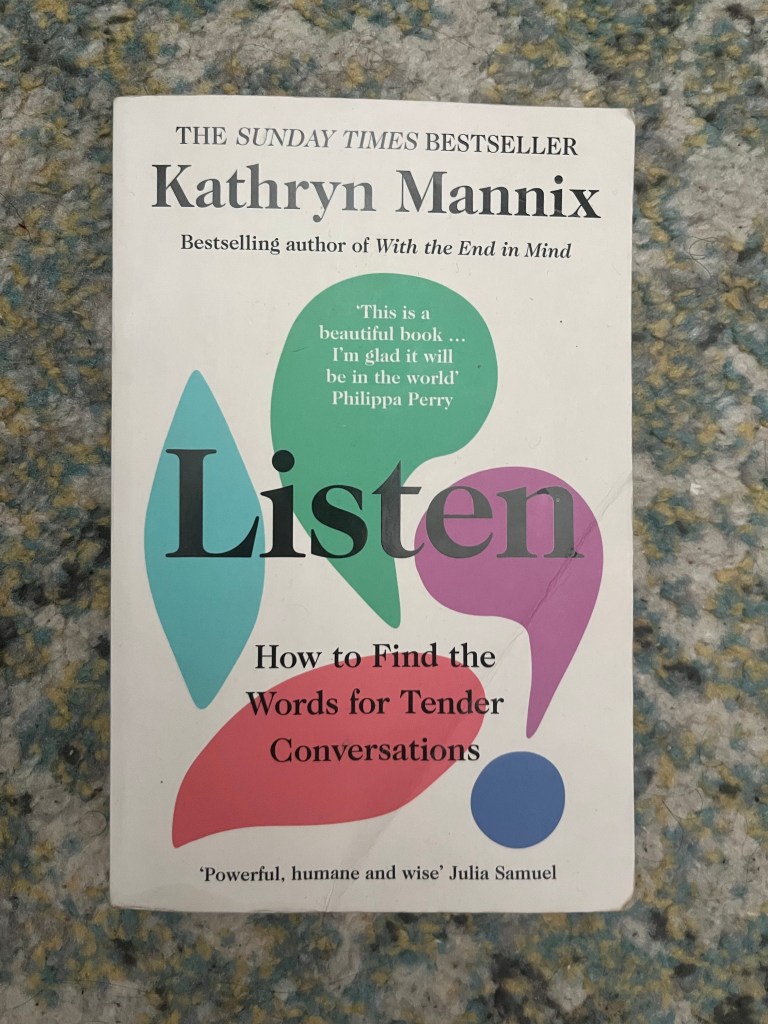
Listen: How to find the words for Tender Conversations. Kathryn Mannix

I stumbled across this one after listening to the Word of Mouth podcast by one of my favourite authors Michael Rosen and his guest Kathryn Mannix. Have a listen if you’re into finding out random facts about words at https://www.bbc.co.uk/programmes/m0013hrc She was on the podcast to discuss her latest book, a guide to supporting others going through difficult or challenging times. Mannix captivatingly told the story of her early days as a trainee doctor, having to complete the sensitive task of telling someone their husband had died. She followed the academic steps, did all the right things yet it led to her being hit across the face! From this, she has developed a more humane approach to tender conversions which we all can seamlessly adopt.

I’d like to think I’m a good listener but even I’m no stranger to butting in with unhelpful comments like “at least it’s not x” or “don’t worry” when someone has entrusted me with a probelm. Mannix explains that it’s in our human nature to innocently attempt to make things better, to fill silences and try to help by relating their situation to a similar experience. Although these can work for some conversations and certain individuals, there are more simple and effective strategies. Truly listening! Simply acknowledging their feelings, naming how it makes you feel to be opened up to, retelling what they have said in your own words and the power of delicate touch.

What I love most is Mannix’s choice of genre. It’s a combination of a memoir, self-help book with aspects of fiction. There are characters going through relatable experiences ranging from illness, grief, sexuality, money concerns and disagreements in public situations, this is a mean to explore a plethora of strategies managing conversations in a variety of contexts. Many of these situations are inevitable, so why not be prepared for them?

It’s mostly conversational, the fictional aspects are written beautifully as she sets the scene and it’s not at all patronising. Some of the suggestions can appear unrealistic, such as “I’m open to a discussion but let’s eat first as I won’t be able to focus”. Imagine telling someone they have to wait to open up because you’re hungry!

I’ll admit it’s another one of my niche books, however judging by the reviews by an eclectic audience, she’s done very well. Based on the content of unfortunate situations, it is a difficult book to read when not in the mood. I often read it on the commute to and from work but i couldn’t always read it after a tricky teaching day. I’d recommend it as a holiday book surrounded in a happy environment to read in one go!

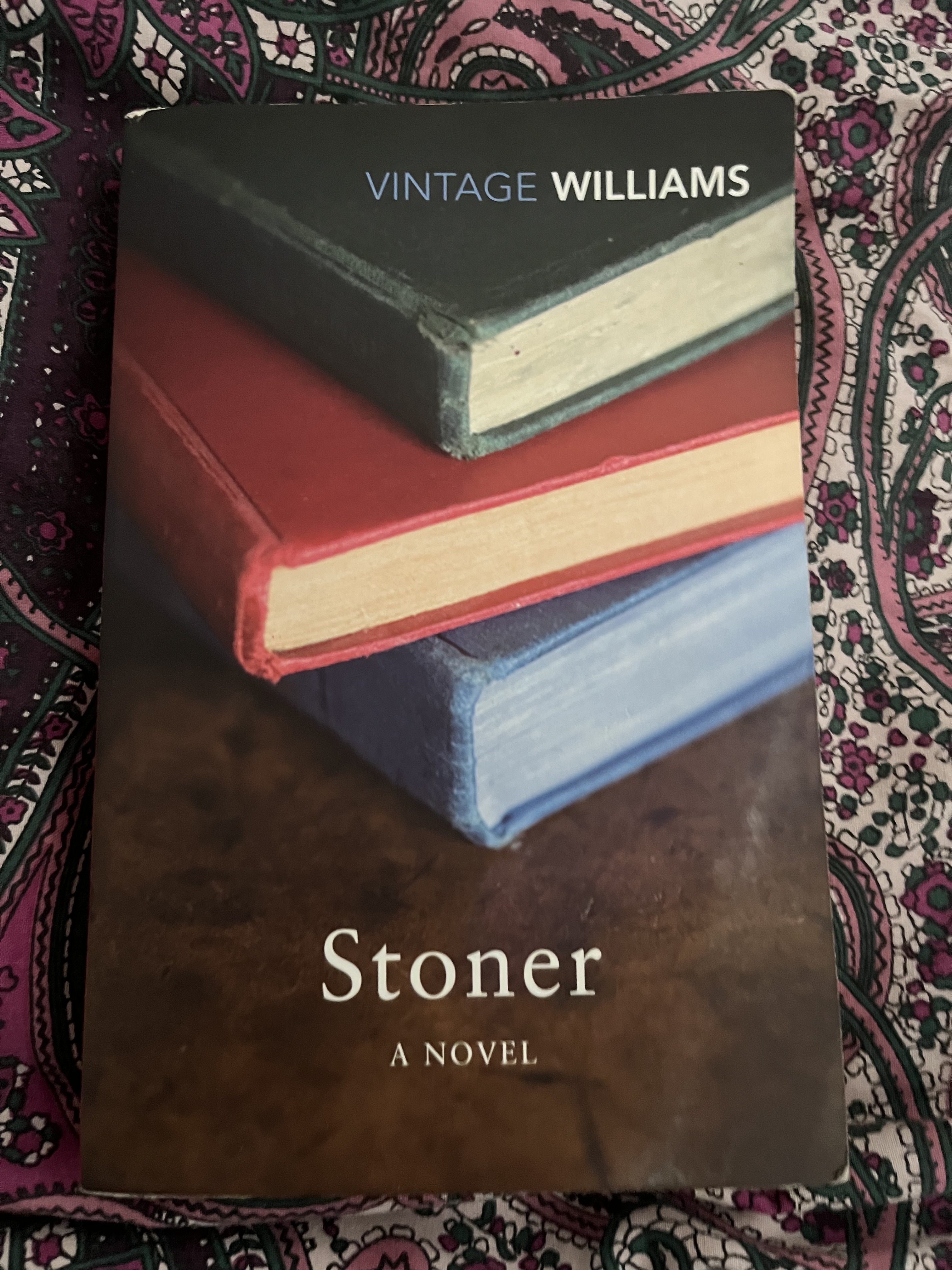
Stoner by John Williams

This was an unusual charity shop find. Having rekindled my love for reading after completing To Kill a Mockingbird (blog pending!), I was doubtful I’d find anything as gripping for a long time. This was partially correct, since Stoner was an initially dull read about life which became one I couldn’t stop thinking about. In hindsight, its mundane aspect was the entire point of the novel.

Readers follow the life of William Stoner (no, he was not an actual stoner) from his first day at the University of Missouri in 1910 until his demise after lecturing at the university, experiencing heartbreak and discovering the complexities of fatherhood. That is honestly all there is to it! Williams writes eloquently, with incredible detail and explores the intricate inner thoughts of a somewhat contented man throughout his life. It was difficult not to be attached to him and the vivid characters in Stoner’s simple relationship circle. Similar to that of a reality show, you become slightly obsessed with every aspect of his life, despite vaguely knowing what is to come.

Stoner is regarded as a Campus novel based on its prime setting on the university campus. With that in mind, there were many pages of references to famous writers such as Shakespeare, Keats and references to Anglo-Saxon Poetry, which were apt for the storyline however I did have to cheekily skip over! Otherwise, it was a classic depressing old book, growing in popularity according to a Guardian article in 2013, so a bit of a cult classic! I’d give it a 4/5 as I was moved by the end and reminded of the futility of life throughout.