The Lost World by Sir Arthur Conan Doyle

Dinosaur obsessed

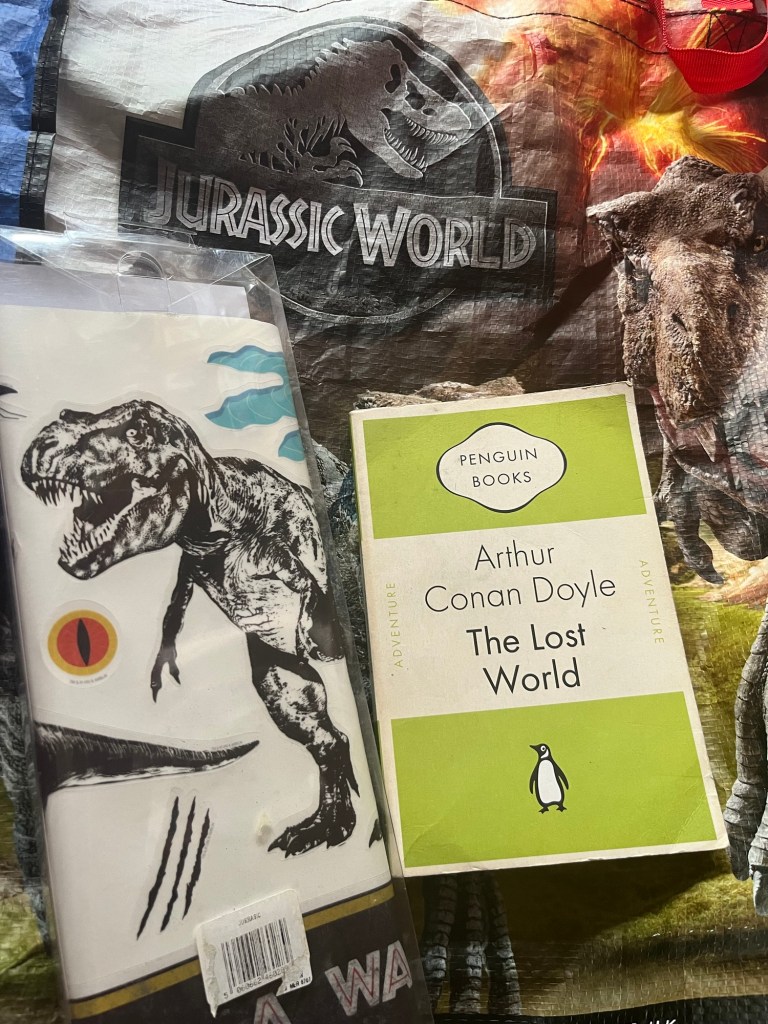
My boyfriend and I are humungous Jurassic Park fans. So much so that the tagline for our own relationship is “Life finds a way”. This applies to The Lost World by legendary Sir Arthur Conan Doyle published in 1914, since it inspired the works of the Jurassic Park franchise, it’s own 1960s film as well as other adventure films. Although, iconic Doyle was inspired by HG Well’s novella The Country of the Blind in 1904. It was about a blind man finding a hidden world in the Andes where everyone is blind and the ground was paved in gold. The Lost World literally found me as i stumbled across it in a box of free books! I recognised the author (Sherlock!), taking no notice to the title. As a result, i became transfixed when clues alluded to The Lost World being a hidden region of exotic South America, which is home to none other than living dinosaurs! Then, everything clicked or should i say, roared?

The detailed science fiction novel begins with everyman Edward Malone, a keen reporter surprisingly offering to take on a momentous challenge to impress his love interest, Gladys, demanding a “brave and noble man”. His editor sends him to infamous Professor Challenger, a foreboding figure with “hair that was peculiar, plastered down in front in a long, curving wisp over his massive forehead.”His unique experiences in South America had been contested and ridiculed. He abhors journalists yet sees a genuine interest in adventure in Malone. His drive to impress Gladys is the catalyst to send him to discover whether Challenger and his late explorer partner, Maple White’s dinosaur research were authentic. Doyle vividly describes each of the men that follow Challenger to recreate his Lost World Expedition. Here, they face perilous experiences with indiginous men, become in awe of extinct creatures (pterodactlys, stegosaurus and iguanadons) and find a way to escape the unforgiving jungle.

It was impressively written! His descriptions of the texture of the dinosaurs to the sweltering heat of the location was superb. I did find the ending rather rushed, however it was the first of a series so the open ending was a good hook for further reading. What impressed me most was Doyle’s knowledge of science and research to depict a newly discovered land, probably due to his expertise as a physician That being said, based on its early twentieth century publication there are dated and racist views of tribesmen and the perception of slaves that are to be read with caution. Overall a 5/5 as i was well and truly hooked. It unlocked my book rut!
Life lessons on going under, getting over it, and getting through it: Getting Better by Michael Rosen

Happy (belated) World Book Day. Who better to celebrate than discuss my absolute favourite author…

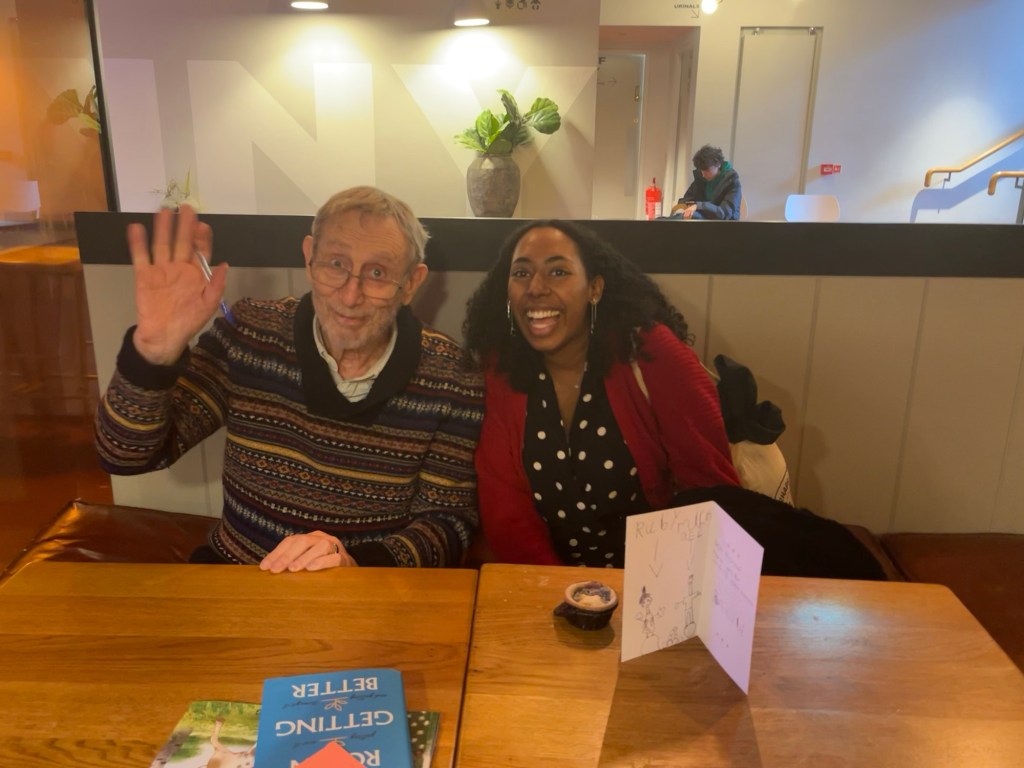
Of course the witty, whimisical and wonderful Michael Rosen. Renown for capturing children’s hearts from poetry to books, such as nostalgic favourites like “We’re going on a bear hunt” to becoming an internet sensation “noice”. It was a dream come true to watch him perform many of his iconic poems and entrancing storytelling last December. Let alone to have a little chat, hug and book signing! He evoked a gentleness and sincerity in our conversation (about teaching!). It transported me back to my ten year old self when he visited my primary school. I vividly remember him performing “bendy bendy pencil”, with the same enthusiasm. Despite his infinite successes from children’s laureate, guardian writer, podcaster and writer, it’s hard to forget that he is only human. In fact, he was one of the first people in England to be hospitalised at the start of the pandemic in 2020 at the vulnerable age of 74. The NHS put him into an induced coma where he lay for forty night and forty days (yes, he made a biblical Joke about this!) whereby he finally woke up to the sounds of his children’s voices over the phone. Determined to reclaim his power of speech and mobility, he also went on a psychological and self-reflective journey which he vividly retells in, Get Better.

I was compleyely hooked for the entirety of his inspiring life story due to the abundance of anecdotes and tangents. From losing his eighteen year old son to Meningitis (get your jabs uni students!), to discovering late in life that he had an autoimmune thyroid condition and reflecting on his family history of jewish war survivors, it was a reminder that everyone bears their own, or generational traumas. As my first read of 2024, it was not what I was expecting. I thought it was a self-help guide, which it partially was due to his reflections encouraging the reader to do the same. My favourite part was end where he listed all that he was grateful for in life, since he was given a second chance to embrace it, and he left extra pages for the reader to begin own creative endeavours.

If you’re as obsessed with Michael Rosen, fancy a little life pick-me-up as we countdown to summer or want to rediscover the beauty of life in a humorous way, then this is the book for you. It’s a biased 5/5 for me!

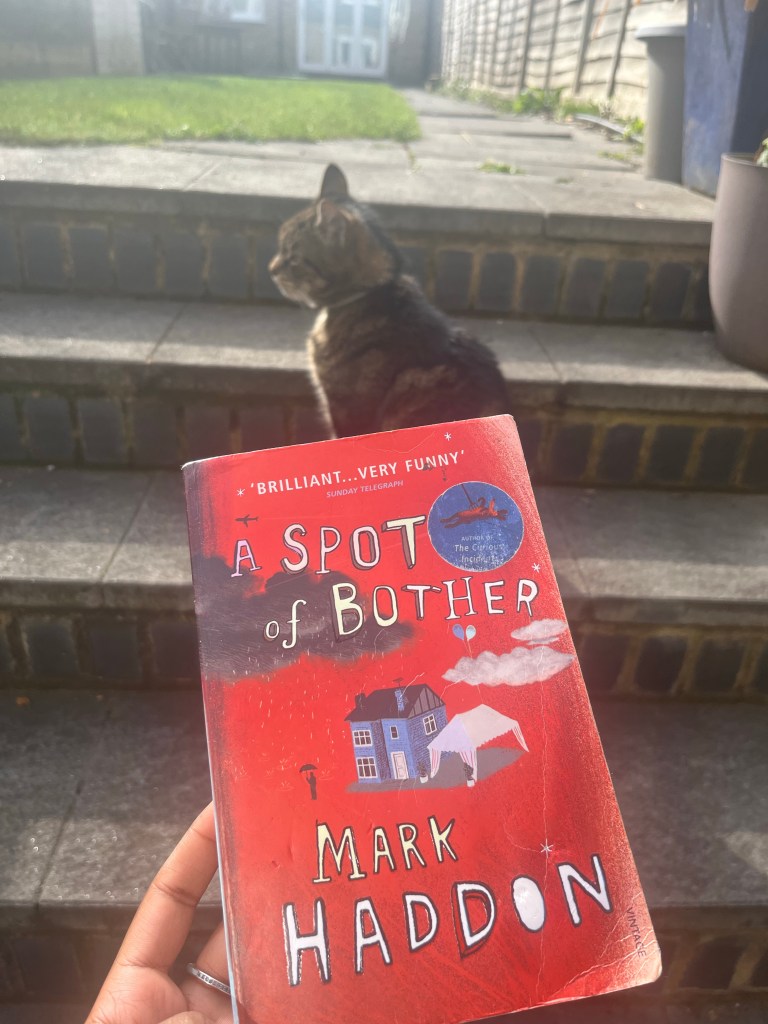
A Spot of Bother by Mark Haddon

Reading and cat sitting. Easter bliss

I immediately recognised Haddon’s iconic illustrations from the eclectic collection of books in the charity shop. His distinctive style transported me back to being in my year eight English lessons encapsulated by reading ‘The curious incident of the dog in the night-time’ which he is more renown for. Having adored the book written from the perspective of a young boy with aspergers syndrome and seeing the stage adaptation twice, I knew Haddon’s style of writing wouldn’t disappoint in his adult fiction ‘A Spot of Bother’. Themes of mental health, family dynamics and British culture made it a light-hearted yet heavy read. I’ll explain…

Despite its huge size, it’s a very easy read. I finished it in a few days over the Easter holidays, where I spent much time on public transport. Nonetheless, it felt like hearing gossip about your neighbours as Haddon invites readers in the mind of members of the Hall family. It begins with the perspective of elderly gentleman George, who discovers a red mark on his thigh which leads him to spiral into thinking he has cancer, becomes dangerously depressed and anxious weeks before his daughter’s wedding. George’s narrative is of a humble, ordinary grandad keeping much to himself, when really he is in dire need for psychological help. It is contrasted by chapters told by his wife, Jean, as she ventures on a scandalous love affair with George’s old colleague. She is motherly, preoccupied with wedding arrangements, riddled with guilt about her affair and unsure what has happened to her husband recently. Her daughter, Katie, is feisty, yet also in turmoil as she contemplates whether she truly loves her rugged fiance or that he makes a wonderful stepfather to her son Jacob (solely there as a form of comic relief). The final member of the family, my personal favourite, is Jamie, the homosexual son not willing to mix his private life with his family life at the extent of losing his loving partner. It’s like a soap opera! Flicking between one storyline to the next, however all coming together by the end at a wedding in their garden.

It was filled with a whirlwind of sub-plots, ample cases of dramatic irony and a relatable bittersweet family life that did not disappoint until the very end! I hate that feeling of thoroughly enjoying a moving, gripping book until you finish it. It’s not that the ending was awful, I think it was rather abrupt. Though the more I think of it, as George increasingly loses his mind including episodes of self-harm and blackouts, mental health doesn’t always have a happy ending. Maybe I wanted an answer to help manage my own battle with depression and anxiety, yet George stayed present and in the moment. So it’s open to interpretation. The rawness of George’s mental state was insightful as Haddon would use many compound sentences to replicate a mind spiralling into panic. The heavy themes were mixed between humorous, typical family life of children throwing a tantrum and awkwardness bumping into old friends. There were a few too many characters as each family member came across so many different people, although it did add to it feeling like an authentic family. Overall, I really enjoyed it until the open ended ending so 3.5/5!

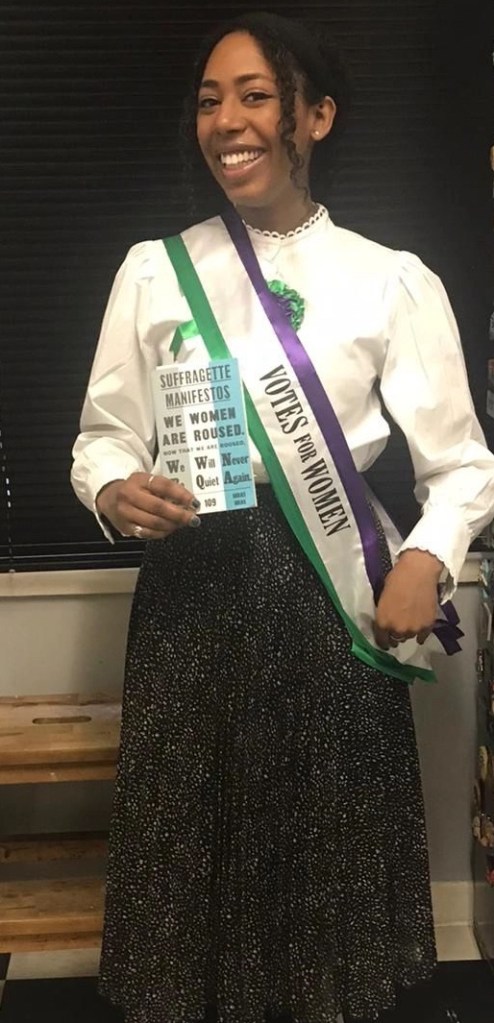
World Book Day 2023 Suffragette Manifesto: we women are roused. Now that we are roused, we will never be quiet again.

Obligatory parent wbd photo

Ok so it’s not strictly primary school related or a fun, fictional read for Workd Book Day, but enlightening my class on inspiring women such as Emmelinre Pankhurst (last year) was a worthwhile decision. Our school has a “bedtime read” theme this year, so pyjamas it is.

Let’s be honest, this was an incentive to become a teacher. I look forward to the annual opportunity to celebrate the power of books and support the charity aiming to improve social mobility through reading. Designed by UNESCO, they ensure every child owns a book of their own to make reading a habit thus increasing children’s life chances. It is marked in over 100 countries around the globe.

Now to the book review; Penguin released a twenty book collection entitled “Great Ideas” to celebrate the work of radical, prodigious thinkers. They have striking covers, which caught my eye (a classic case of judging a book by its cover!). The Penguin Suffragette Manifesto is a collection of documentation during the iconic “Votes for women” campaign fighting for the right to vote in the U.K in the 19th and 20th century. It’s a slim book, with a traditional typeface made up of speeches to pamphlets from notable suffragettes such as Emmiline Pankhurst.

What I loved most was the range of writers and speakers including union workers, actresses, mill workers and aristocrats. The broad range of text makes each new piece a thought-provoking experience. It was hard to read at times based upon the injustice of how women were treated and the language based on the time written. The power of words is rife throughout the text as they passionately encouraged men and women around the country for support.

Next on my reading list is more books on the Suffragists which were more peaceful in their protests, however I am in awe of the dedication of the suffragettes’ forms of protests including hunger strikes, throwing bricks at parliament and countless demonstrations. There is still a long way to go in terms of gender equality in the U.K. and across the globe. I recommend the film Suffragettes as an insightful portrayal of the movement. I read the Big People, Little Dreams children’s book about Emmeline Pankhurst which is more child friendly and a lighter read. Overall I’d give it a 5/5 because how could I not?!

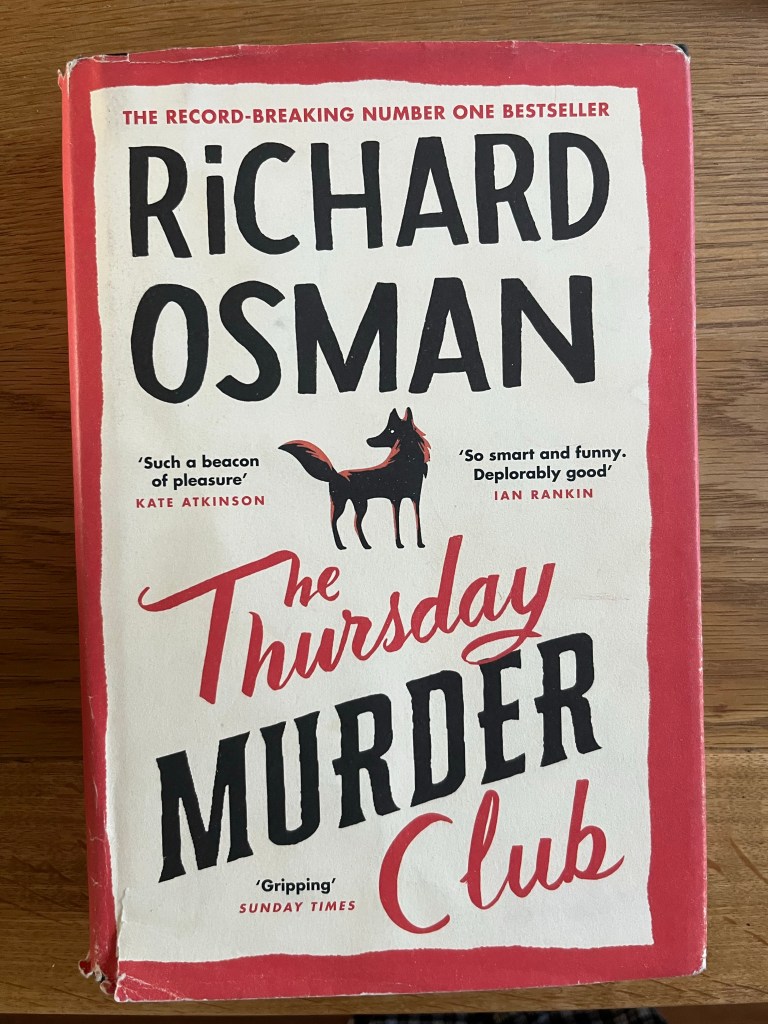
Richard Osman’s Thursday Murder club

Do you keep the sleeve on or off? I felt bad for ripping this copy lent to me…

National treasure and tv show sensation, Richard Osman wrote his first book The Thursday Murder Club and it was an instant success. His likeable, amiable demeanour shines through the crime story underpinned with British humour.

Based on a visit to a retirement home, Osman was inspired to set his novel in Coppers Chase. Here, a retired group mull over unsolved murder cases as a form of entertainment. Written from the perspective of a few of the sleuths, Joyce’s diary entry was my favourite based on her commentary on what cakes she’d eaten and her visits to a vegan cafe. A friend of mine told me that the fictional character has her own real Instagram handle! Nonetheless, the group have their own murder case to solve as someone on their housing development is murdered. It’s very much a written game of cluedo, like a whodunnit scenario and it does keep you gripped right until the satisfying end (no spoilers!).

I’ll be honest, despite the modern references (WhatsApp, tinder and Waitrose) and easy narrative, I didn’t completely enjoy it. It’s a small entry because of this. There were too many characters, most of them funny and relatable but I got lost trying to remember who was who and and this confused me speculating who might have been the suspect. There was far too much speech based on his numerous characters and some irrelevant chapters. I’d recommend it for someone wanting to get back into reading, for the sense of accomplishment after completing a book and the mystery was worthwhile. It will be turned into a film soon and I’ll look forward to seeing it on screen. 3/5

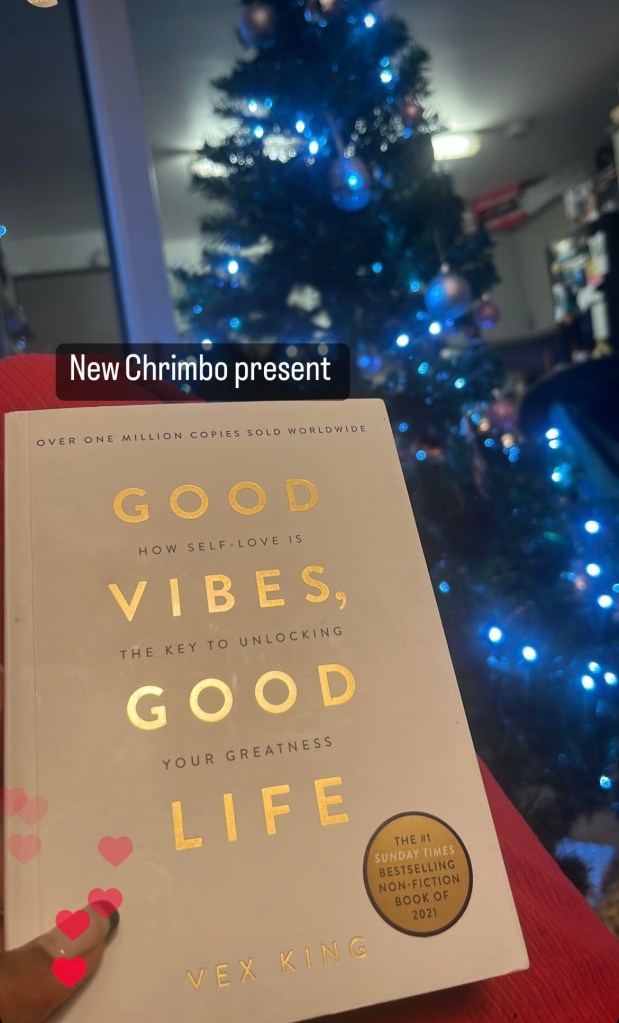
Good vibes, good life: how self-love is the key to unlocking your greatness in life. Vex King

Christmas pressie

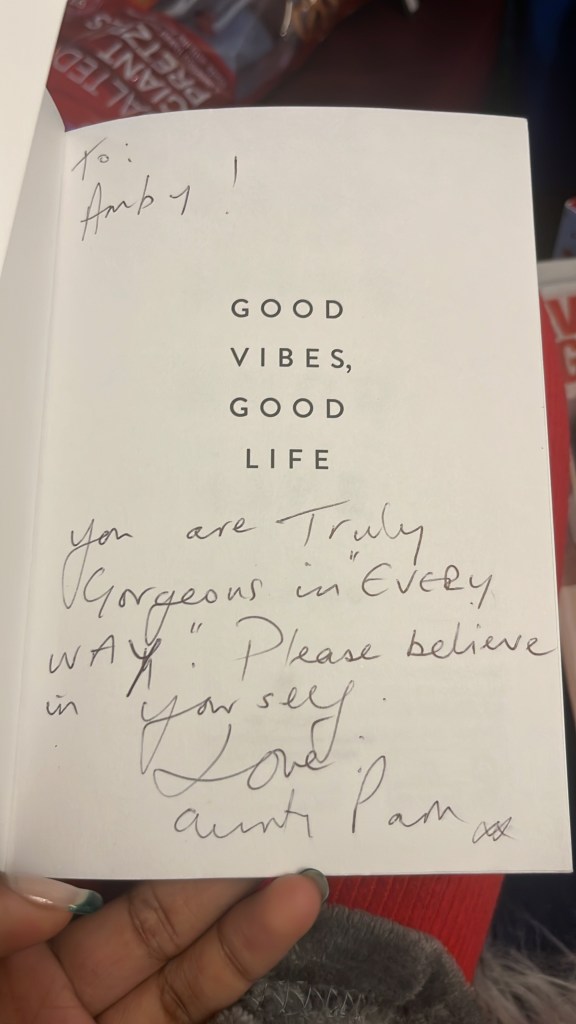
It’s February! Christmas feels like a distant memory and for that reason I haven’t had a chance to write up my chrimbo read. Having spent the day at my iconic aunt’s house over the festive period, her theme for presents was “pertinent” and “positivity”. Therefore her gift to me epitomises that (scroll down for the heartfelt inscription). Do you write in gift books?

Despite the cringy title, I really valued the message of how to find self-love. As a teacher, sister and friend I find myself putting others before myself because I thought that’s what life was about. However I’ve slowly learnt that you can’t always be there for others, if you don’t have the capacity to look after yourself. I enjoy showering others with love and care. I feel a strong sense of purpose and moral justice whenever I can help someone else. Though, my therapist asked me something while I was feeling low, “How would you help a friend in your situation?” Then everything clicked! It’s so much easier to help others, give advice, truly listen (new book post pending, Listen by Katheryn Mannix) and support others yet how could I do that to myself? Vex King explores exactly this, how can you be a true friend to yourself?

I must admit I have a bias against self-help books because I didn’t think they can help. I still don’t to an extent. Though now I believe if you want to make a difference in yourself, there’s no harm in starting with a book. King is conversational, with accessible language and highlights the significance of looking after your mind, body and soul.

It’s a personal book, drawing upon his own experiences to suggest ways to make simple, everyday changes. Having been homeless as a child, living in dilapidated hostels and managing an unstable relationship with his parents, King’s adverse experiences shaped him to inspire others. Strategies such as practising self-care, adopting healthy habits, embracing new opportunities and believing in your own self-worth. Essentially, the positivity you give our will come back to you (at some point!).

It’s an easy read and I’m glad I started the year with an inspiring, influential book. By completing it in less than a week, I already had a sense of achievement. Some aspects were gimmicky, with Instagram buzz words such as “toxic people” and “vibes”. Which I think tainted the morals and foundational message in which to be your authentic self. It was unexpected gift, one that I’d possibly not purchase for myself but would buy for others looking to make a positive change. 3.5/5

Wholesome

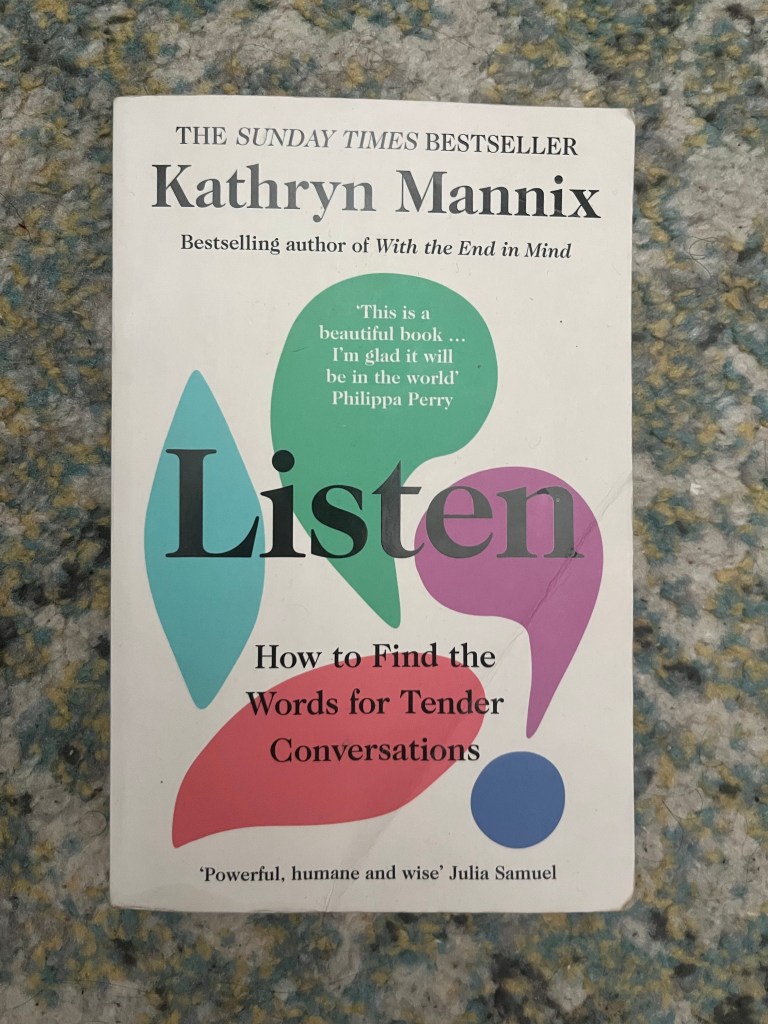
Listen: How to find the words for Tender Conversations. Kathryn Mannix

I stumbled across this one after listening to the Word of Mouth podcast by one of my favourite authors Michael Rosen and his guest Kathryn Mannix. Have a listen if you’re into finding out random facts about words at https://www.bbc.co.uk/programmes/m0013hrc She was on the podcast to discuss her latest book, a guide to supporting others going through difficult or challenging times. Mannix captivatingly told the story of her early days as a trainee doctor, having to complete the sensitive task of telling someone their husband had died. She followed the academic steps, did all the right things yet it led to her being hit across the face! From this, she has developed a more humane approach to tender conversions which we all can seamlessly adopt.

I’d like to think I’m a good listener but even I’m no stranger to butting in with unhelpful comments like “at least it’s not x” or “don’t worry” when someone has entrusted me with a probelm. Mannix explains that it’s in our human nature to innocently attempt to make things better, to fill silences and try to help by relating their situation to a similar experience. Although these can work for some conversations and certain individuals, there are more simple and effective strategies. Truly listening! Simply acknowledging their feelings, naming how it makes you feel to be opened up to, retelling what they have said in your own words and the power of delicate touch.

What I love most is Mannix’s choice of genre. It’s a combination of a memoir, self-help book with aspects of fiction. There are characters going through relatable experiences ranging from illness, grief, sexuality, money concerns and disagreements in public situations, this is a mean to explore a plethora of strategies managing conversations in a variety of contexts. Many of these situations are inevitable, so why not be prepared for them?

It’s mostly conversational, the fictional aspects are written beautifully as she sets the scene and it’s not at all patronising. Some of the suggestions can appear unrealistic, such as “I’m open to a discussion but let’s eat first as I won’t be able to focus”. Imagine telling someone they have to wait to open up because you’re hungry!

I’ll admit it’s another one of my niche books, however judging by the reviews by an eclectic audience, she’s done very well. Based on the content of unfortunate situations, it is a difficult book to read when not in the mood. I often read it on the commute to and from work but i couldn’t always read it after a tricky teaching day. I’d recommend it as a holiday book surrounded in a happy environment to read in one go!

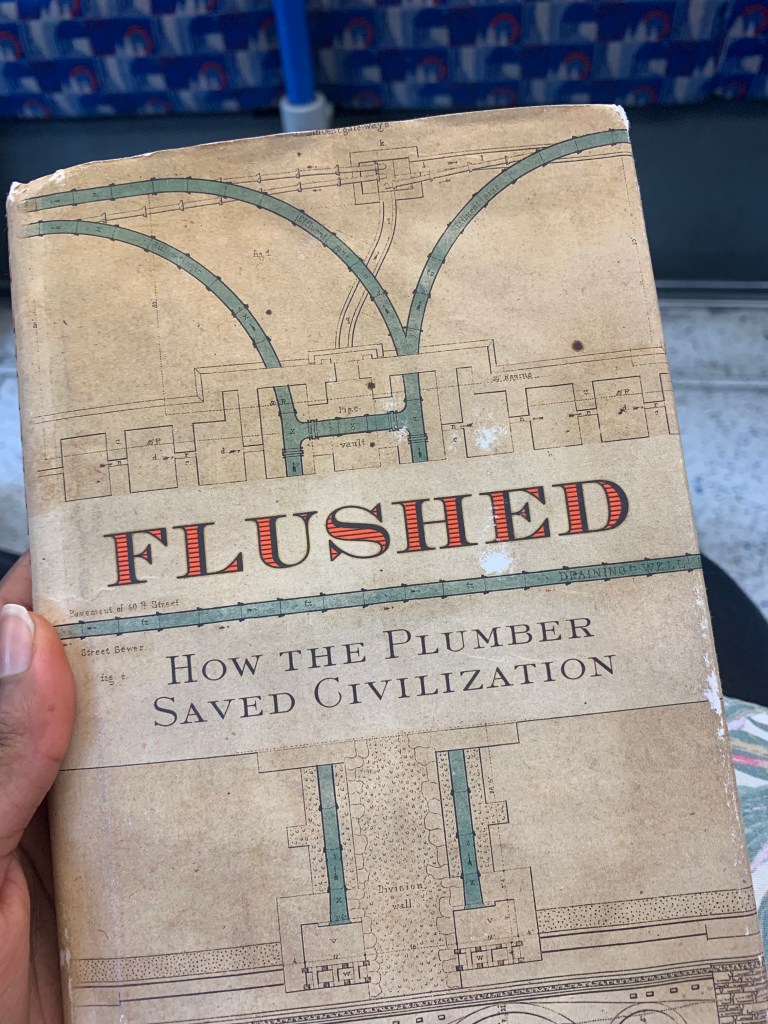
Flushed by W. Hodding Carter

Friend’s copy of this quirky book!

Before you think this’ll be a load of crap (pun intended) it was actually an interesting and insightful read into the history of plumbing. There’s something very British about waterworks being taboo, however it’s the one thing we all have in common! I borrowed this book from a friend at work as her father was intrigued by someone else reading it on the train. In this borrowed copy, I love how he folded down a page where the author wrote a paragraph collating all the euphemisms for using the toilet, “pee, poo, wee-wee, spend a penny etc,” very comical for a serious man!

Which goes to show that it’s a niche book but not a bad read! Carter discuss’ how his fascination (more like an obsession) about plumbing stems from trying to avoid paying for a plumber and thinking, “How hard can it be?”. When, in reality, it is way more intricate and complex than it seems. He appreciates the impact of early civilisations inventing methods for managing their waste, such as the Romans using efficient pipe work that we still use today. He was in awe of the clever engineering that has evolved over centuries. He was so committed to this book, he even took a trip from the USA to London just to take part in a sewer visit and invested in a Japanese toilet. 

There was a lot of pages about various materials used for pipework and the science behind it, which reminded me of science lessons I tuned out of! However, it was written in a conversational way and overall easy to follow, with personal anecdotes and relatable comparisons.

Worth a read if you need a wild card!

3/5