
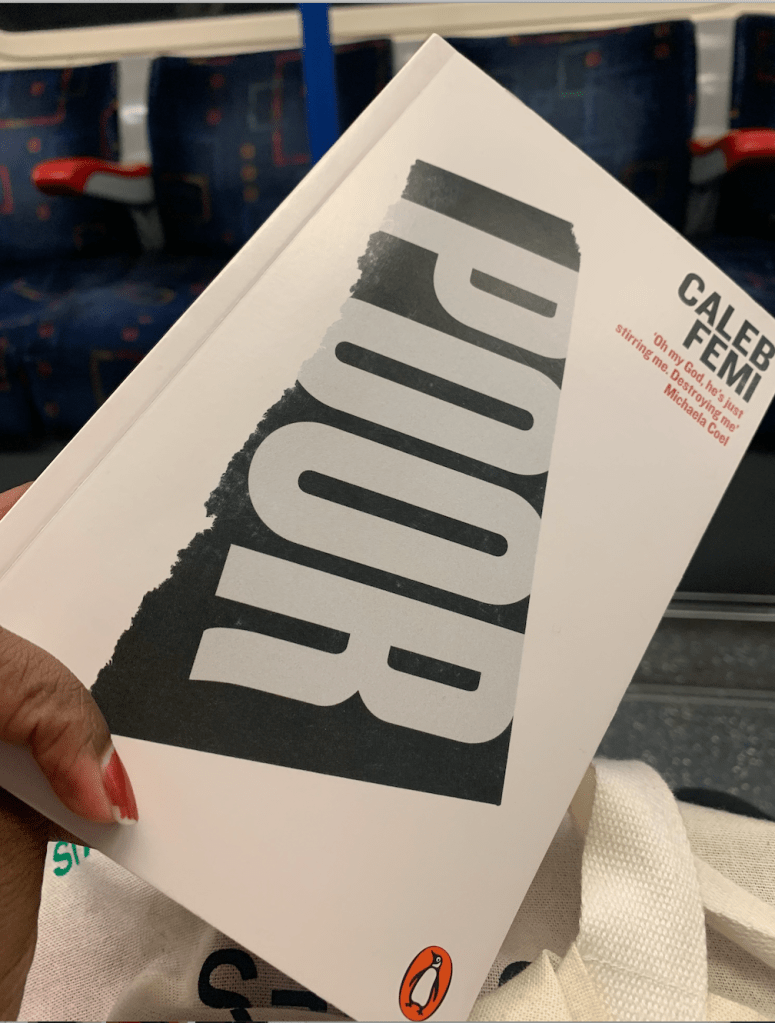
A stunning, remarkable combination of original poetry, photography and extracts regarding the genuine lives of the poor, black youth in Peckham Estate (South London, UK). Femi truly captures the roughness and reality of modern London; whilst delicately exposing the social inequalities which have amounted, as a result of hapless social housing estates.
I’d come across this book after my obsession with ‘Don’t Hate the Playaz’ on ITV hub (a riveting talkshow/gameshow with guests from the RNB music industry) hosted by Rizzle Kick’s Jordan Stephens, who posted this book on his instagram. As a speaker for toxic masculinity, representing black positive culture and of course, the music industry, I immediately ordered the book based on his interest. Wow, I was not disappointed! As you may have realised, I adore classic novels and literature, therefore was utterly enlightened to be transported into the vivid world of poetry, photography and unique narratives.
Each page or two speaks volumes. You can feel Femi’s focus, passion and energy to meticulously select words throughout. My personal favourite page consists of a playscript type structure, in which a Council Estate Designer denotes his decision to build with concrete in one line, immediately beneath this idea is juxtaposed with a council estate inhabitant who describes the loneliness and suffocating feeling of being surrounded by concrete. It’s astonishing how those opposing conversations mirror social inequality. Here, we have this wealthy Conservative architect from the 1960s wanting a quick-fix for the post-war housing crisis, right next to the twenty-first century innocent boy, struggling to find a way out of the poverty cycle. That was only one example of Femi’s intricate work that makes up this book.
There was also a personal aspect to this novel. I grew up in a housing association London flat, grew up in poverty and as a black young woman, have experienced a plethora of hardships. However, I had a wonderful childhood full of diversity, morals and love. Femi also captures the beauty in humanity which comes with poverty, such as the iconic, cultural home cooked meals and infamous South-London accent ‘bruv, money-up’ which takes me back to my beloved inner-London comprehensive school days! I could see and relate to aspects of these stories, without being patronising or judgemental.
Femi has given the South-London youth a voice through a variety of mediums within this book. I can’t persuade you enough to pick up a copy, it’s incredible.
 Amber Reads something